

Last updated: October 13, 2026
Quick Answer: For most teams, the right answer is 3 core owners: one for the brief, one for the draft, and one for final review. In AI blog production, that split keeps responsibility clear and reduces avoidable errors.
Key Takeaways
- Risk level determines the right role map.
- Three separate people often make the workflow stronger.
- Solo creators should separate roles deliberately.
- In small teams, assign ownership by stage rather than title.
If your AI blog output feels fast but messy, the fix is not just “better AI.” It is a clean responsibility map for AI blog production that says who decides the angle, who feeds the model, who checks claims, who approves the draft, and who owns the final page. That matters most when more than one person touches the article, even if the team is only 2 or 3 people.
What Actually Determines the Right Answer Here
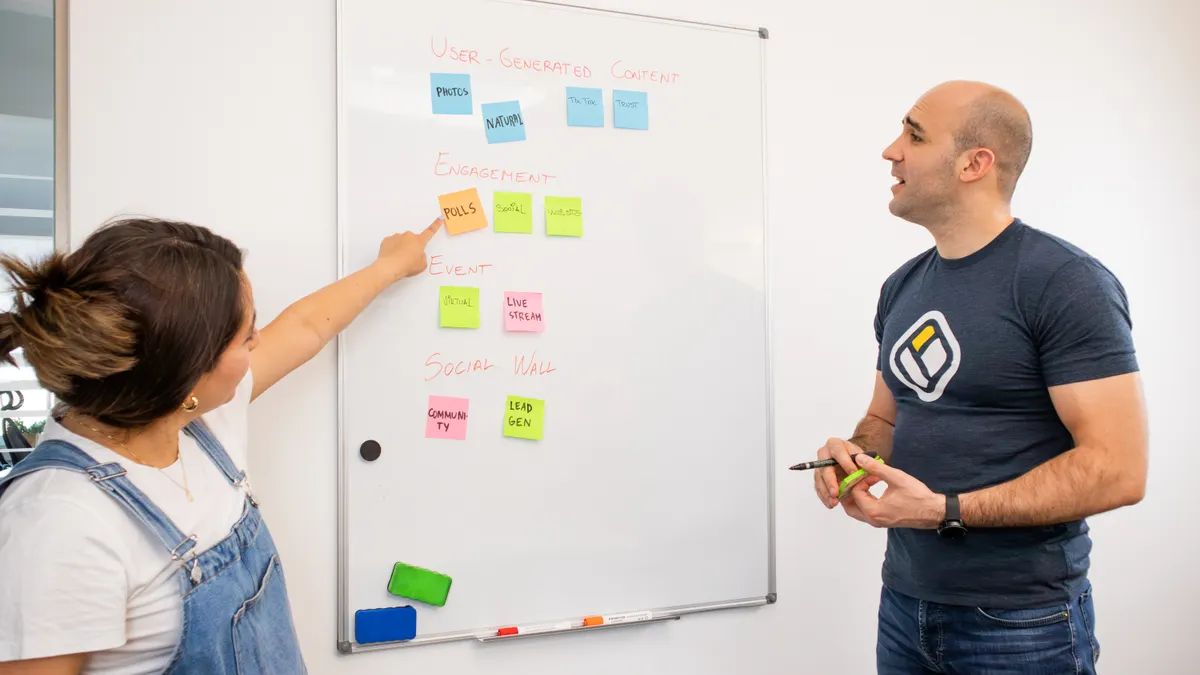
The right role map depends on one thing: how much risk sits in the content. If you are publishing listicles about generic software features, a small team can keep the map simple. If you are writing about legal, medical, financial, or technical topics, the review layer has to be stricter, and the person who approves the article cannot be the same person who drafted it.
The biggest mistake I see is assigning “blog writer” as a catch-all. In AI blog production, that title hides at least five jobs: choosing the keyword, building the brief, prompting the model, editing for accuracy and voice, and publishing with metadata and links. When one person owns all five, shortcuts creep in. When five people own none of them, work stalls.
A practical rule: if a task can change the meaning of the article, it needs a named owner. If a task only changes presentation, it can stay with the editor or publisher. That is the split that keeps AI drafts usable without turning your workflow into a committee.
Here is the simplest way to think about it:
| Situation | Best Path | Why Other Options Fail |
|---|---|---|
| Solo creator | One person owns strategy, prompting, editing, and publishing | Splitting it across tools without a named reviewer leaves gaps |
| Small marketing team | One strategist, one draft owner, one editor/approver | “Everyone reviews” creates slow approvals and no accountability |
| Regulated topic | Separate drafter, fact-checker, and final approver | The writer should not be the final gate on risky claims |
| High-volume blog | Template-driven roles with fixed handoffs | Ad hoc ownership breaks when output scale rises |
If the blog is a marketing channel, the map should also reflect who owns conversions. A article may be “done” in the editor’s eyes but still fail because the call to action, internal links, or schema are missing. Quick check: if you cannot name the person who could say “no” at each stage, the role map is too loose.
Who Should Own the Brief, the Prompt, and the Final Edit?
The brief should belong to whoever understands search intent and business goals; the prompt should belong to whoever can translate that brief into model instructions; the final edit should belong to a human editor who can kill bad claims. If those are three different people, the workflow is often stronger. If the same person handles all three, the process only works when that person is excellent and has enough time, which is a fragile setup.
Start with the brief owner. This person decides the topic, audience, angle, source notes, and the “do not say” list. For an AI blog production workflow, that brief should include the primary keyword, 3 to 5 supporting points, and any claims that need confirmation from source material. A brief without source notes pushes the model into improvisation.
Then assign the prompt owner. This person is not just “the AI user.” They are responsible for translating the brief into instructions that fit the model’s job: outline, first draft, rewrite, summary, or variation. If you are using ChatGPT, Claude, or Gemini, the prompt owner should keep a reusable format so each article follows the same shape. Consistency beats cleverness here.
The final editor should be separate whenever accuracy matters. A good AI editor is not there to “polish” only. That person checks whether the draft answers the target query, whether headings match the search intent, and whether the claims are defensible. If the blog covers software, the editor should also catch product names, integration claims, and interface descriptions that drift out of date.
Here is a workable sequence:
- Define the topic, audience, and goal in a 1-page brief.
- Attach source notes or product documentation before prompting.
- Generate an outline, not the full draft, if the topic is complex.
- Produce the draft from the outline using one consistent prompt template.
- Run a human edit for accuracy, logic, and tone before publishing.
- Save the final prompt, brief, and edit notes for the next article.
If the person writing the brief also approves the finished piece, use a second reviewer for higher-risk topics. That extra set of eyes matters more than fancy AI settings. Quick check: if your prompt changes every time, the brief probably lacks enough detail.
If You’re a Solo Creator, Use a Narrower Role Map
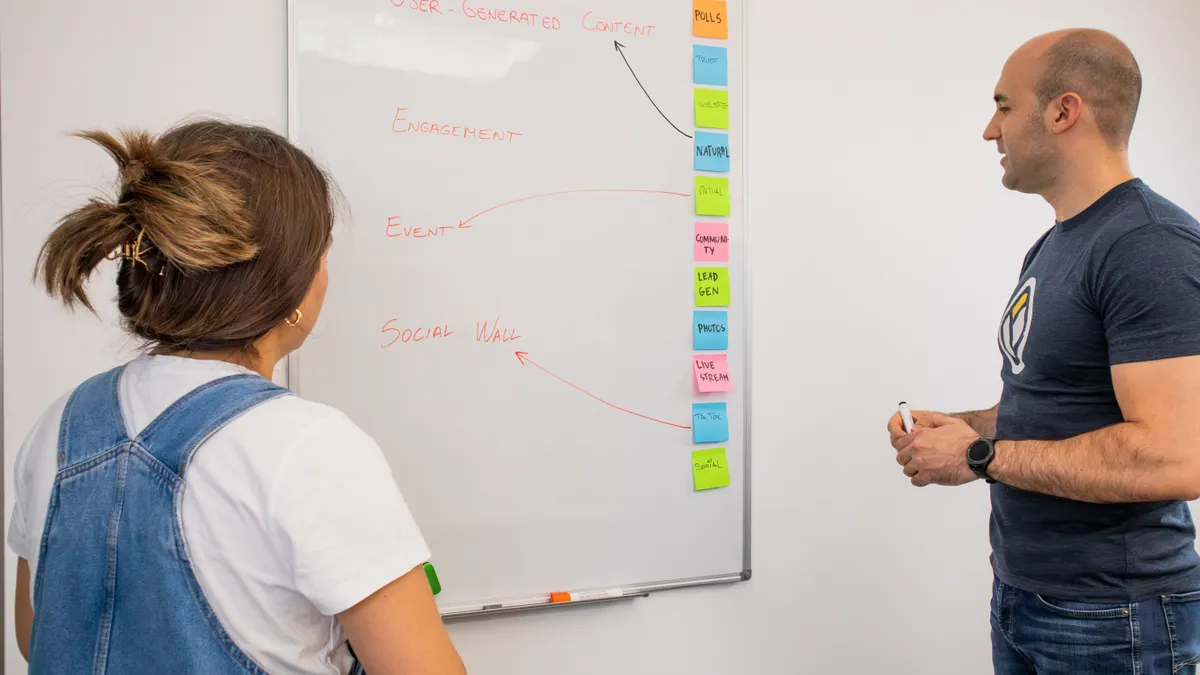
If you are one person doing the whole AI blog production process, then combine roles on purpose instead of by accident. The best solo setup is not “one person does everything loosely.” It is “one person performs three distinct checks in sequence.” That keeps the work moving without pretending there is a team.
I would split a solo workflow into strategist, operator, and editor mode. In strategist mode, you choose the topic, define the search intent, and decide what the article must answer. In operator mode, you feed the model the brief and create the draft. In editor mode, you step away long enough to read it like an outsider and cut anything weak, vague, or unsupported.
This matters because AI encourages speed at the exact point where judgment should slow down. A 20-minute draft can become a 2-hour cleanup if the brief is fuzzy. A tighter solo map saves more time than a better prompt library.
Here is a solo workflow I would use:
- Write a 5-line brief: audience, topic, intent, must-cover points, and risk level.
- Pick the draft type: outline, first draft, rewrite, or refresh.
- Use one template prompt with fixed slots for sources, tone, and section count.
- Pause after the draft and mark every claim that needs a source or a rethink.
- Edit for structure, then edit again for accuracy and specificity.
- Publish only after checking the title, H2s, meta description, and CTA.
The downside is obvious: solo production has no built-in challenge function. If the article is about a sensitive software feature or a regulated topic, the same person can miss weak logic because they already know what they meant to say. That is why a solo map works best for lower-risk content or for creators who are disciplined about source notes.
A useful benchmark is whether you can identify three things on every draft: the reader’s question, the claim that matters most, and the one section most likely to go stale in 30 days. If you cannot, the solo map needs another review step. Quick check: if you are the only person involved, your real choice is between speed and scrutiny, not between AI and no AI.
How to Split Work in a Small Team Without Creating Bottlenecks
If you have 2 to 5 people, assigning ownership by stage is usually the cleanest move. A small team breaks down when everyone has “content” in their job description and nobody owns the handoff. The fix is a simple chain: strategist, drafter, editor, approver, publisher.
The strategist owns what gets written. The drafter owns getting the first version onto the page. The editor owns clarity and accuracy. The approver owns risk and brand fit. The publisher owns formatting, links, and on-page details. That sounds rigid, but it actually speeds things up because no one has to guess who is on the hook.
This is where AI can help most. The drafter can use ChatGPT, Claude, or Gemini to build a first pass from a structured brief. The editor then spends time improving the article instead of untangling a messy prompt. If the team is publishing 10 or more articles a month, this division keeps quality from sliding as volume rises.
The trade-off is that handoffs take discipline. If the strategist does not give source material, the drafter improvises. If the editor rewrites the angle, the approver may need to revisit the article. That is normal, but the team needs a rule for when a draft goes back a step and when it moves forward.
Use this sequence:
- Strategist writes the brief and flags the risk level.
- Drafter creates the outline and first draft from approved sources.
- Editor checks structure, repetition, and factual weak points.
- Approver signs off on claims, brand voice, and audience fit.
- Publisher adds links, headings, image alt text, and final formatting.
A clean team map should also define response times. If the editor takes 4 days and the publisher 4 more, AI speed disappears into the queue. That is why I would set simple service levels inside the team, even if they are informal. Quick check: if an article waits more than 48 hours between handoffs, your role map is slowing the blog down.
Where AI Blog Production Usually Breaks, and What to Do Instead
The normal advice breaks down when the work gets risky, repetitive, or mixed with non-blog tasks. If the article must be accurate to a changing product, then the editor needs current source material, not just a polished draft. If the article must support lead generation, then the role map must include someone who checks the CTA and conversion path. If the content is localized, then language review becomes its own job.
Here are the edge cases that change the map:
- Situation: The topic is technical and changes often. What changes: the source check matters more than the first draft. What to do instead: assign a reviewer who can verify against current docs, release notes, or help-center pages.
- Situation: The blog is for SEO at scale. What changes: consistency matters more than individual flair. What to do instead: standardize briefs, prompts, and approval criteria across all writers.
- Situation: The team uses freelancers. What changes: ownership gaps appear at every handoff. What to do instead: give freelancers a brief template, a source pack, and a named in-house editor.
- Situation: The article includes product comparisons. What changes: the risk of outdated or biased claims rises. What to do instead: require a fact-check step and a source log.
- Situation: The article is repurposed from webinars, sales calls, or support tickets. What changes: raw notes need interpretation. What to do instead: assign one person to turn the source into a blog angle before AI gets involved.
A generic workflow says “add review.” That is not enough. Review of what? Against which source? By whom? For a blog about software, I would treat integrations, pricing references, and feature names as high-risk fields even when the rest of the article is ordinary marketing copy. Consult the product team or legal counsel if those claims could affect customers, and back the review process with source documentation from the vendor and the company’s own help pages.
The wrong setup is to let AI draft, then ask the closest available person to “have a look.” That is how factual drift survives. Quick check: if your blog borrows from sales or product teams, the normal writer-editor split is probably too thin.
What Tools and Standards Help Define the Roles?
The right tools are the ones that make ownership visible, not the ones that merely generate text. If you need to track who did what, use a workflow tool such as Notion, Asana, Trello, or Airtable to separate brief, draft, review, and publish stages. If you need source handling, keep documentation in Google Docs, Confluence, or a shared folder with clear naming. If you need model work, use the AI tool that fits your team’s existing habits rather than chasing novelty.
The standard I would use for the responsibility map is simple: one owner per decision, one reviewer per risk layer, and one publisher per final output. That is close to the old editorial logic used in magazines, but adapted for AI. It also fits the basic content operations idea behind RACI-style ownership, where you can label who is responsible, accountable, consulted, and informed.
If you want a benchmark for quality control, use a checklist with at least these items: search intent, source notes, claim verification, tone consistency, internal links, CTA, and final formatting. Seven checks may sound small, but it is enough to catch most AI blog failures without turning approval into bureaucracy.
A few honest trade-offs:
- More roles mean better control, but slower turnaround.
- Fewer roles mean faster shipping, but more hidden errors.
- Tighter source rules improve trust, but increase prep time.
- Heavier editing improves quality, but can erase the speed advantage of AI.
That is why the role map should match the stakes of the article, not your admiration for speed. A 600-word update article does not need the same approval chain as a 2,000-word comparison page for enterprise software. Quick check: if your team cannot describe the approval path in one sentence, the tools are not the problem.
FAQ
How many people do I need to map roles and responsibilities in AI blog production?
You can do it with one person, but 2 to 4 people is easier if accuracy matters. The minimum workable map is still the same: one owner for the brief, one for the draft, and one for final review.
Should the person who uses the AI also edit the final article?
It can work for low-risk articles, but not always for sensitive ones. If the same person writes and edits, add a second reviewer whenever the topic includes product claims, regulated advice, or fast-changing information.
What is the most common failure in AI blog production?
No one owns the source check. The draft looks finished, but no one has verified the claims against documentation, expert input, or current product information.
Drafted with AI; not yet reviewed by a person.