
Last updated: October 25, 2026
Key Takeaways
- One owner per decision keeps the blog content workflow clear.
- Too much role overlap slows the workflow instead of speeding it up.
- Use four handoff points: brief approval, draft delivery, expert or editorial review, and final approval.
- AI should pause when judgment, liability, or brand risk starts.
- Set the ownership before you assign any AI tasks
- Who does what in an AI blog workflow?
- How should the handoff points work from brief to publish?
- Where should AI stop and a human take over?
- What does a practical ownership matrix look like?
- How do I keep reviews from piling up?
- How do I know the workflow is set up correctly?
A blog content workflow works when each person owns one decision and AI fills the gaps between those decisions. This guide explains how to set up roles and handoffs in an AI blog workflow so the team can move from brief to publish without confusion. If the content strategist, writer, editor, subject matter expert, SEO specialist, and approver all touch the same draft at the same time, the process slows down and nobody knows who can say “yes” or “no.”
For teams using AI content tools, the core question is not whether AI can help. It is who decides what, when the draft moves, and where human review starts.
Set the ownership before you assign any AI tasks
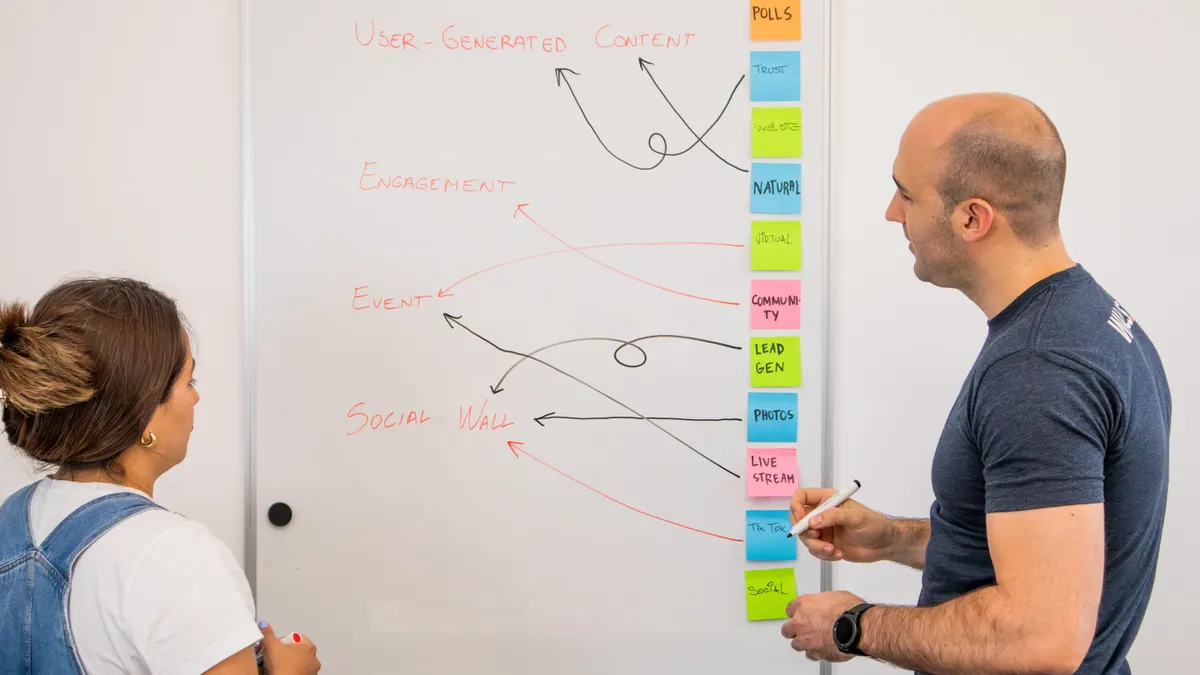
A clear blog content workflow starts with one owner per decision, not one owner per document. The fastest way to prevent rework is usually to decide who owns topic direction, draft quality, factual accuracy, search intent, and final publication before a single prompt is written. If AI is doing first drafts, the team still needs humans to own judgment calls.
Use a simple rule: the person closest to the risk owns the decision. The content strategist owns whether the topic belongs in the plan. The writer owns structure, tone, and completeness. The SEO specialist owns search requirements such as intent match, heading logic, and internal targeting choices. The subject matter expert owns technical accuracy. The editor owns readiness for publication. The approver owns the final go/no-go.
That division matters because AI can speed up production but cannot absorb responsibility. A draft can sound finished and still be wrong, off-brief, or too thin to publish. A workflow without explicit ownership tends to create “everyone reviewed it” and “nobody approved it.” That is how posts get stuck in comments for 3 days and still miss the real problem.
The cleanest setup is a RACI-style matrix, even if the team never uses that label. For each stage, write down who is Responsible, Accountable, Consulted, and Informed. Keep it to one primary owner per step. If two people are marked accountable, the handoff is already broken.
This structure is not for teams that want to crowdsource every decision or let AI make editorial calls on its own. It is for teams that want repeatable output and a clear stop point for human review. If the project is high-stakes, regulated, or heavily technical, the approval gates need to be tighter, not looser.
Who does what in an AI blog workflow?
The core roles in an AI blog workflow are the content strategist, writer, editor, subject matter expert, SEO specialist, and approver, and each one should own a different kind of decision. If those roles overlap too much, the workflow gets slower instead of faster.
The content strategist sets the brief. That means the audience, angle, priority, and business goal. The strategist should decide whether the topic belongs in the pipeline at all. The writer should not have to guess that from a vague brief.
The writer turns the brief into a draft and uses AI for speed, not authority. That usually means outlining, expanding subpoints, summarizing source notes, or generating alternative intros, and teams should consult a qualified professional where the topic needs domain judgment. The writer owns whether the draft reads like something a human would want to finish. If AI writes the first pass, the writer still owns the final shape.
The editor checks logic, readability, transitions, and completeness. The editor is not there to rewrite from scratch or act as a second strategist. Their job is to catch weak claims, duplicated points, missing context, and sections that do not earn their place.
The subject matter expert checks accuracy where the topic requires domain knowledge. They should review the facts that matter, not line-edit every paragraph. If the SME is forced to clean up style, the workflow is misdesigned.
The SEO specialist checks whether the draft matches the search intent, whether headings make sense, and whether the page serves the query without drifting into adjacent topics. The SEO specialist should not be the one deciding final tone or facts. See Google’s guidance on helpful, reliable content and search quality at Google Search Central.
The approver is the last human gate. That person signs off on publication readiness, brand fit, and any business risk. For a small team, the approver may also be the content lead. For a larger team, it is often the person with the authority to say the post goes live.
A common mistake is making the editor, SME, and approver all act as co-owners. That sounds collaborative and usually produces a queue.
How should the handoff points work from brief to publish?
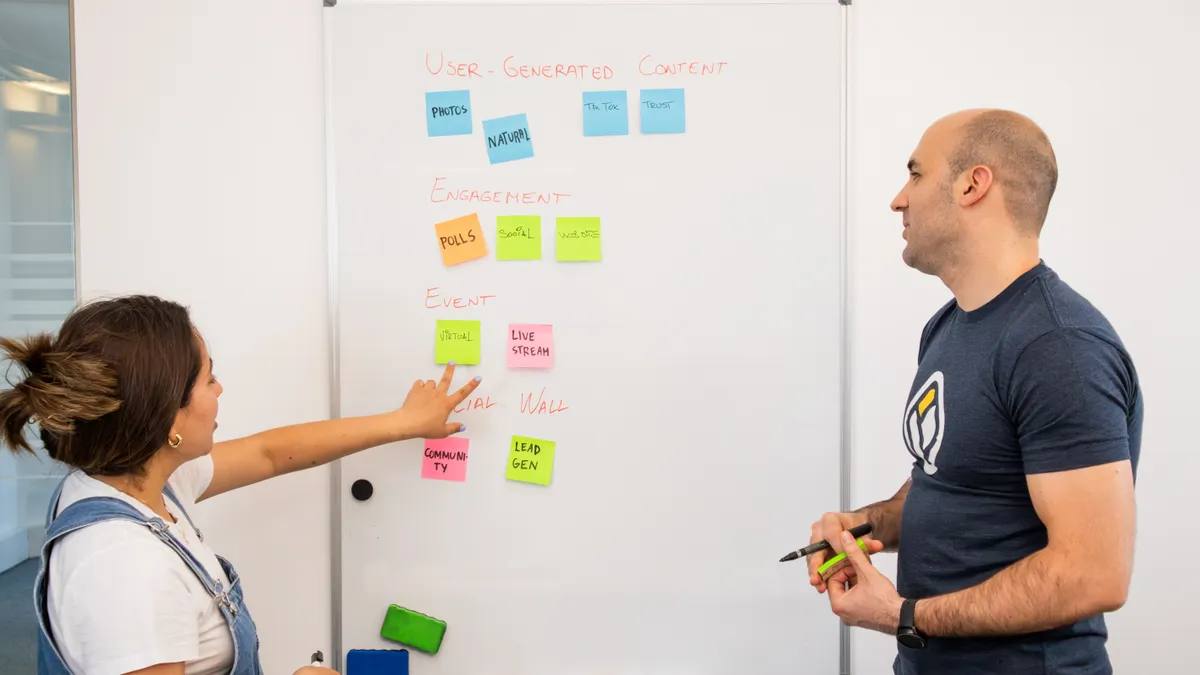
The handoffs should happen at four clean points: brief approval, draft delivery, expert or editorial review, and final approval. Each handoff needs a named owner, a due date, and a definition of “done,” or the workflow will drag.
1. Strategist hands off the brief to the writer. The brief should include the target reader, the working title, the goal of the post, the angle, the required sections, and any hard constraints such as product names or claims to avoid. A good brief is short enough to scan in 5 minutes and specific enough that the writer can start without a follow-up meeting.
2. Writer hands off the first draft to the editor. The draft should already have section headings, a complete argument, and placeholders only where facts still need checking. Do not send a half-outline and call it a draft. The editor should receive something that can be reviewed in one pass, not assembled from scraps.
3. Editor or SME hands off annotated feedback back to the writer. Comments should be grouped by severity: must-fix, should-fix, and optional. That makes it easier to know whether the next pass is a 15-minute cleanup or a 2-hour rewrite. A comment like “this feels off” is not a handoff; it is a delay. For safer editorial practice, consult a qualified professional or source-specific guidance when the draft involves regulated claims.
4. Writer hands off the revised draft to final approver. At this stage, the draft should already reflect factual review, SEO adjustments, and structural edits. The approver should not be used as a second editor. The point is final permission, not another round of content surgery.
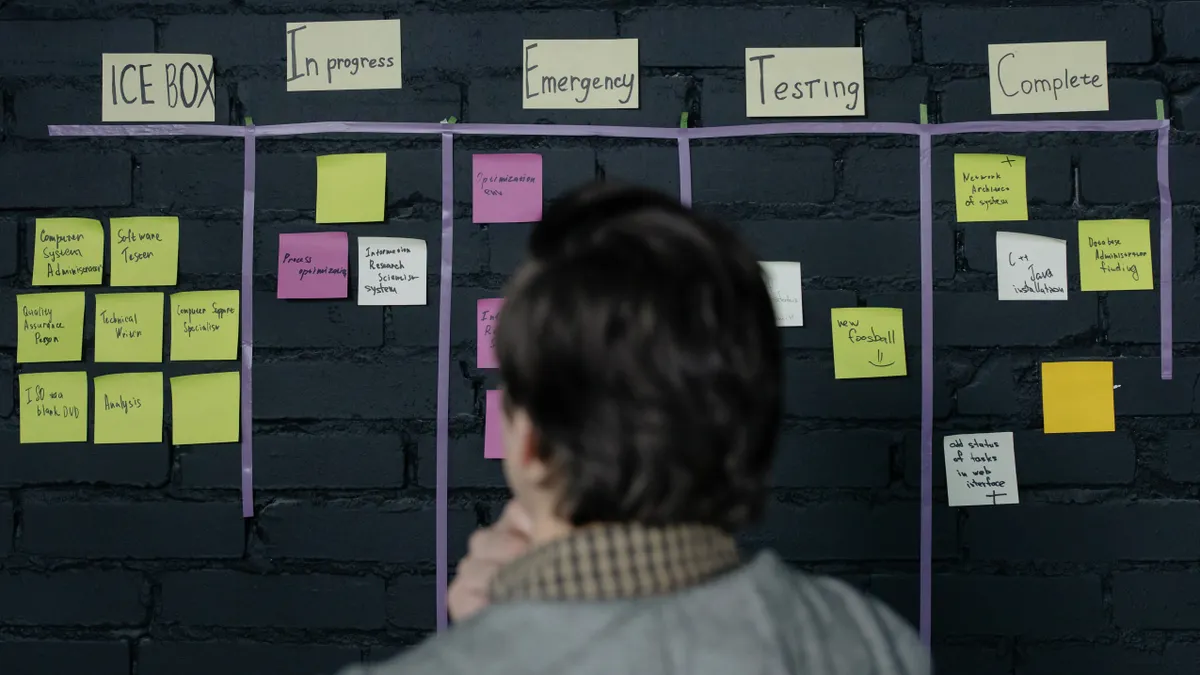
If the team uses a project board, the handoff can be as simple as moving a card from “Drafting” to “Review” to “Approval.” The tool matters less than the gate. A workflow with 3 columns and clear ownership works better than a 12-step board with fuzzy responsibility.
The biggest trade-off here is speed versus rework. Fewer review layers shorten the cycle, but only if the gatekeepers know exactly what to check. More layers reduce risk, but only if each layer has a distinct job.
Where should AI stop and a human take over?
AI should stop at the point where judgment, liability, or brand risk begins. That usually means AI can help with outlines, variations, summaries, and first-pass drafting, but a human should take over before the content is treated as accurate, final, or publication-ready. Where the topic carries legal, medical, financial, or other high-stakes risk, consult a professional or source before publishing.
The clean boundary is this: AI can generate options, but a person must choose among them. AI can draft an intro; the writer decides whether it serves the reader. AI can rephrase a section; the editor decides whether the argument still holds. AI can surface keyword variations; the SEO specialist decides which ones fit the page without stuffing.
A useful rule is to stop AI before any of these moments:
- the first factual claim that matters to the reader,
- the point where the article promises a process,
- the point where the draft could be misunderstood as expert guidance,
- the final version that will be approved.
That boundary matters because AI output often looks polished enough to skip scrutiny. A clean sentence can still hide missing steps, wrong emphasis, or a mismatch between headline and body. The more polished the output, the easier it is to miss the gap.
This is also where approval gates matter most. If the workflow includes an SME review, the AI-generated draft should stop there until the domain facts are checked. If there is no SME on the team, the workflow should narrow to subjects that do not require deep technical validation. That limitation is real, and ignoring it is how teams publish confident errors.
I would not use this structure for content that needs legal sign-off, medical validation, or finance review unless a qualified professional is already part of the process. Those topics need domain control before speed.
What does a practical ownership matrix look like?
A practical ownership matrix assigns one owner to each stage and one reviewer for each risk area, then keeps the list short enough to use on a Tuesday afternoon. The matrix should fit on one page, not in a slide deck.
A simple version looks like this:
- Topic selection: content strategist owns, SEO specialist consulted
- Brief creation: content strategist owns, editor consulted
- Outline: writer owns, SEO specialist consulted
- First draft: writer owns, AI assists
- Factual review: subject matter expert owns, writer revises
- Structural edit: editor owns, writer revises
- Search review: SEO specialist owns, editor consulted
- Final approval: approver owns, editor informed
That layout works because it separates the kind of decision from the person making it. The strategist does not approve line edits, the editor does not decide the business priority, and the SME does not own headline optimization. In a small team, one person may fill more than one role, but the decision still needs a single owner.
The matrix also clarifies when a handoff is complete. “Draft finished” is not enough. Completion should mean the next person can act without guessing. For example, a factual review handoff is complete when source notes are attached, uncertain claims are highlighted, and the draft marks which lines need verification.
One common mistake is putting AI in the matrix as if it were a role with accountability. AI is a tool, not the owner of a step. It can assist writing, summarize notes, or suggest headlines, but it cannot accept responsibility for a bad brief or a missed claim.
If the team is small, the matrix can still help. One person may wear three hats, but the hats should be named separately. Otherwise the workflow turns into one person fixing everything that came before them.
How do I keep reviews from piling up?
Reviews stay under control when each reviewer has a narrow checklist and a time limit, usually 24 to 48 hours for routine blog posts. The goal is not endless polishing; it is getting the right check done once.
Start by giving each reviewer only what they need. The SME reviews claims and terminology, not style. The editor reviews structure and clarity, not keyword density. The SEO specialist reviews search fit and heading logic, not source citations. The approver reviews risk and readiness, not paragraph-level wording. That separation cuts comment overlap.
Next, define what counts as a blocking issue. A blocking issue is something that prevents publication: wrong facts, missing compliance language, a broken structure, or a title that misses the search intent. Everything else goes into a non-blocking notes list. Without that split, every review feels urgent and every draft becomes a negotiation. For content in regulated areas, confirm the standard with a qualified professional or the relevant source before treating a note as non-blocking.
Use version control in plain language. Label files or tasks with draft numbers so nobody comments on an old copy. “v3 – SME review” is better than “final-final-updated.” The more versions that float around, the more likely the team is to approve the wrong one.
The trade-off here is that tighter gates reduce flexibility. A rigid workflow can feel slower for a 600-word post that only needs light editing. But for a recurring blog process, consistency beats improvisation. The team can sometimes relax a gate for a low-risk draft, but it is harder to recover from a missed review after publication.
If the workflow keeps breaking, the cause is usually not AI. It is usually an unclear owner, a vague review brief, or a handoff that never said what “done” looked like.
How do I know the workflow is set up correctly?
The workflow is set up correctly when every person can answer three questions in under 30 seconds: what I own, what I review, and when I pass it on. If any role cannot answer those questions, the process is still fuzzy.
Look for these signals:
- the strategist’s brief can be acted on without a meeting,
- the writer knows which claims need checking before review,
- the editor knows what counts as a blocker,
- the SME knows which sections require factual validation,
- the approver receives a nearly finished draft, not an open-ended request.
A good workflow also produces the same shape of output across multiple posts. It does not produce identical content, but it does produce the same sequence of decisions. That repeatability matters more than fancy automation. A blog content workflow that works on Monday, breaks on Wednesday, and needs a rescue call on Friday is not a workflow; it is a queue.
If the team wants more speed later, add automation around routing, reminders, and status updates. Do not automate the handoff logic before the role logic is clear. A fast broken process just creates broken drafts faster.
Who should own each step in an ai blog workflow?
The content strategist should own the brief, the writer should own the draft, the editor should own structural quality, the subject matter expert should own factual review, the SEO specialist should own search fit, and the approver should own the final go-live decision. AI should assist the work, not own any decision that carries risk or requires judgment.
Where should ai output be reviewed before publishing?
AI output should be reviewed before it is treated as factual, before the editor signs off, and again before final approval if the topic carries any accuracy risk. The safest pattern is usually writer first, then editor or SME, then approver. That keeps AI from becoming the last voice in the room.
How do handoffs work between writer and editor in blog automation?
The writer hands off a complete draft, not a loose outline, and the editor returns grouped comments with clear priorities. The cleanest handoff includes a draft number, a due date, and a definition of what the editor is checking. That keeps the editor focused on readiness and prevents the writer from guessing what to fix.
Drafted with AI; not yet reviewed by a person.